Materials and methods · 20 November 2026
Heat pumps in period and listed houses
Replacing an oil boiler with a heat pump in an old house: insulating first, bigger radiators, air or ground source, planning and consent, and grants.
Many owners of old houses want to replace an oil or LPG boiler with a heat pump. It can be done, but a heat pump only works well in a house that holds its heat, and in a listed house much of the work needs consent. This guide sets out what we have learnt fitting heat pumps to period houses.
How a heat pump differs from a boiler
A boiler heats water for the radiators to around 70°C. A heat pump works most efficiently at much lower temperatures, often 35 to 50°C. That has two consequences for an old house. It needs to lose heat slowly, and its radiators usually need to be bigger.
Insulate first
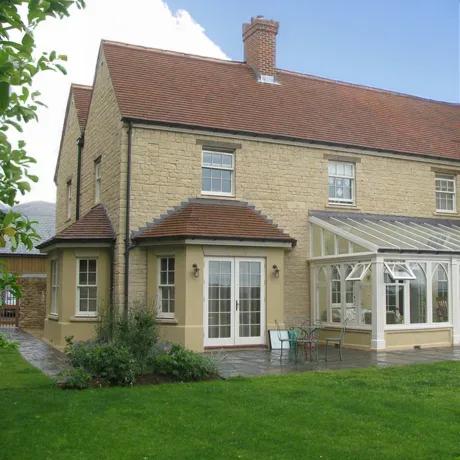
At a period house in Somerset, the owner wanted to replace the oil-fired boilers with air source heat pumps. We had built a three-storey extension at the back of the house in 2013 for the previous owner. This time we insulated the whole house from the outside, walls and roof, taking care over the detail around windows, doors and existing features so the house kept its proportions and appearance. A room that had been too cold to use is now part of the house, and during the summer heatwave the house stayed cool inside.
Insulating the outside means a new render system. On this house it could not match the coarse render on the 2013 extension exactly, and the client chose to accept a slight difference rather than strip sound render from the extension just to match.
Old solid walls have to be able to dry out. Insulation on them should let moisture through, which usually means wood fibre or similar boards with lime-based finishes, not foam boards and cement render. Our guide to lime and cement in old buildings explains why.
Radiators
Because a heat pump runs at lower water temperatures, a room needs more radiator surface to stay warm. In a large house the radiators can be much bigger than the ones they replace. Chosen and placed with care, they can look like part of the room rather than something to hide. Underfloor heating suits heat pumps well where floors are being lifted anyway, but in a listed house lifting historic floors needs consent and is often not acceptable.
Air source or ground source
An air source heat pump has an outdoor unit, which has to be placed where its noise will not disturb anyone and where it can be screened from view. A ground source heat pump draws heat from pipes laid in trenches or boreholes. It costs more to install and needs land and a plant room, but has no outdoor unit to hide. On one barn conversion the barn now houses the ground source plant that heats the main house. The new house we built at Kingston Magna is heated by ground source.
Planning and consent
In England most houses can have an air source heat pump without planning permission, under permitted development rules. Those rules do not apply within the curtilage of a listed building, so a listed house needs planning permission for an air source unit. It also needs Listed Building Consent for the unit and for any work inside that affects the building, such as new pipe runs, larger radiators on historic walls, or insulation.
Insulating the outside changes how a building looks, and on a listed building it is often refused, particularly on the main elevations. In a conservation area, the rules limit where an outdoor unit can go even on an unlisted house. Check with the council before ordering equipment.
Grants
The Boiler Upgrade Scheme pays £7,500 towards an air source or ground source heat pump in England and Wales. From July 2026 it rises to £9,000 for homes off the gas grid that are replacing oil or LPG heating, and the higher rate is due to run until March 2027. The heat pump must be fitted by an MCS-certified installer, who applies for the grant.
If you are thinking about a heat pump for a period or listed house, call Geoffrey on +44 7740 471 543.